
15 Fresh Bedroom Decor Ideas for a Cozy, Stylish Space
Your bedroom should be more than a place to sleep. It should feel comfortable, reflect your personality, and give you a peaceful place to relax at the end of the day. The good news is that creating a beautiful bedroom does not always require expensive furniture or a complete renovation. With the right colors, thoughtful furniture placement, attractive bedding, and a few carefully chosen accessories, you can transform an ordinary room into a welcoming retreat.
These bedroom decor ideas combine practical decorating tips with timeless design inspiration. Whether you have a spacious master bedroom or a small room that needs a little extra character, you can use these ideas to create a space that feels stylish, balanced, and uniquely yours.
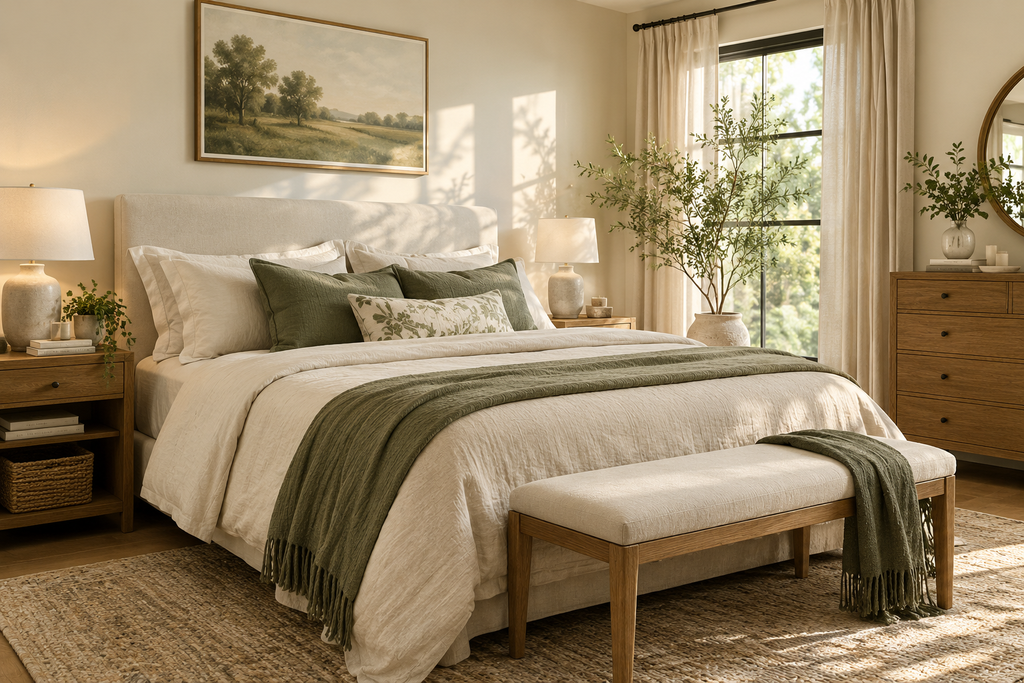
1. Choose a Calming Bedroom Color Palette
Color sets the mood for your entire bedroom. Soft white, warm beige, creamy ivory, and muted sage green are excellent choices for a relaxed and inviting atmosphere. These shades work well with natural wood furniture, textured fabrics, and subtle decorative accents.
For a more distinctive look, choose one main color and complement it with two supporting shades. For example, combine warm white walls with beige bedding and olive-green cushions. Keeping the palette consistent helps the room feel coordinated without looking plain.
2. Make the Bed the Main Attraction
The bed is usually the largest piece of furniture in the bedroom, so it naturally becomes the focal point. Position it where it feels comfortable and leaves enough room to move around.
A padded headboard can introduce softness, while a wooden bed frame creates a warm, natural appearance. If your existing bed is in good condition, update its look with fresh bedding, decorative cushions, and a neatly arranged throw blanket.
The goal is to make the bed look inviting without covering it with too many accessories.
3. Layer Your Bedding for a Luxurious Look
One of the easiest bedroom decorating ideas is to layer different fabrics. Start with clean sheets, add a comfortable duvet or quilt, and finish with a lightweight blanket folded across the foot of the bed.
Mixing textures makes the bed more visually interesting. Cotton sheets, a quilted coverlet, knitted cushions, and a soft throw can create depth without requiring bold patterns.
Choose two or three complementary fabrics instead of combining too many competing designs. This simple approach gives your bedroom a polished, hotel-inspired appearance.
4. Create an Accent Wall Behind the Bed
An accent wall can add character to a bedroom without changing the entire room. The wall behind the headboard is often the best place to introduce a new color, subtle wallpaper, decorative panels, or framed artwork.
Warm taupe, muted green, dusty blue, and soft terracotta can all work beautifully, depending on your existing furniture and lighting.
For a budget-friendly update, paint just one wall in a contrasting shade. If you prefer a more detailed finish, consider simple wall molding or narrow vertical panels. Keep the design proportionate to the room so the wall enhances the space rather than overwhelming it.
5. Use Warm Lighting for a Relaxing Atmosphere
Lighting can change how your bedroom looks and feels. A single bright ceiling light may be practical, but it can make the room feel less inviting in the evening.
Combine general ceiling lighting with bedside lamps or wall lights to create a softer atmosphere. Warm-white bulbs are often a good choice for relaxing spaces, while a focused reading light is useful beside the bed.
If you have a small bedside table, choose a compact lamp. Wall-mounted lights can free up valuable surface space and keep the room looking organized.
6. Add Matching or Coordinated Bedside Tables
Bedside tables provide a convenient place for everyday essentials while helping the bed look balanced. Matching tables create a symmetrical arrangement, especially when paired with similar lamps.
However, matching furniture is not essential. You can use different tables if their heights, finishes, or visual weight complement each other.
Keep the surfaces simple with a lamp, a small book stack, or a decorative tray. Leaving some empty space makes the arrangement feel intentional rather than cluttered.
7. Decorate the Walls With Meaningful Artwork
Bare walls can make a bedroom feel unfinished, but filling every empty area is not the answer. Instead, choose a few pieces that complement your color scheme and personal taste.
A large landscape print above the headboard can create a strong focal point. Two coordinated prints beside a dresser can establish a sense of balance. Abstract artwork and simple botanical illustrations also work well in calm, modern interiors.
Hang artwork at a comfortable viewing height and select a frame finish that relates to the furniture or other decorative details in the room.
8. Make a Small Bedroom Feel More Spacious
Small bedroom decor ideas should focus on both appearance and function. Oversized furniture, crowded walkways, and too many accessories can make a compact room feel even smaller.
Choose furniture that suits the room’s dimensions and leave enough clearance around the bed. Consider a bed with built-in storage, wall-mounted shelves, or narrow bedside tables.
Light-colored walls can help reflect available light, while mirrors can create a greater sense of openness when positioned thoughtfully. Use vertical space for storage and decoration instead of filling every corner with furniture.
9. Introduce Natural Wood for Warmth
Natural wood adds texture and warmth to almost any bedroom style. A wooden headboard, bedside table, dresser, or bench can prevent a neutral room from feeling too plain.
Light oak and honey-toned finishes pair well with cream and sage green. Darker walnut shades create a richer contrast against warm white walls and pale bedding.
You do not need every piece of furniture to have the same finish. A consistent undertone and a balanced mix of materials can make the room feel collected and personal.
10. Bring Nature Into the Bedroom
Plants and natural details can make a bedroom feel fresher and more connected to the outdoors. A small plant on a dresser, a vase of branches, or a botanical print can introduce organic shapes and subtle color.
Choose plants according to the natural light available in your room. If your bedroom receives very little daylight, consider suitable low-light plants or use dried botanical arrangements instead.
Natural materials such as woven baskets, linen curtains, jute rugs, and wooden accessories can also add texture without introducing visual clutter.
11. Choose Curtains That Complement the Room
Curtains influence both the appearance and practicality of your bedroom. Soft, full-length curtains can make a window feel taller and create a more finished look.
For a light and airy style, consider ivory, oatmeal, or warm-white fabric. If you need to block outside light, use lined or blackout curtains that complement the rest of your decor.
Whenever possible, position the curtain rod slightly above the window frame and extend it beyond the sides. This can make the window appear larger and allow more daylight into the room when the curtains are open.
12. Use Mirrors to Add Light and Depth
A well-placed mirror can serve as both a decorative feature and a practical accessory. A round mirror above a dresser introduces a softer shape, while a full-length mirror can be useful for getting dressed.
Position the mirror where it reflects daylight or an attractive part of the room. A mirror facing a cluttered area may simply draw attention to the mess, so consider its surroundings before choosing a location.
Wooden, black, brass-toned, and simple frameless mirrors can all work well, depending on the overall style.
13. Add a Rug to Define the Sleeping Area
A bedroom rug introduces softness underfoot and helps connect the furniture visually. A larger rug placed partly beneath the bed can make the sleeping area feel more complete.
Neutral rugs are easy to coordinate with changing bedding and accessories. Subtle geometric patterns, woven textures, and understated borders can add interest without competing with the rest of the decor.
Before buying a rug, measure the available floor area and consider how much of the rug will remain visible around the bed. The right size often matters more than an elaborate pattern.
14. Keep Storage Stylish and Practical
A beautiful bedroom is easier to maintain when everyday items have a proper place. Cluttered surfaces can distract from even the most attractive furniture and accessories.
Use baskets for extra blankets, drawer organizers for smaller belongings, and decorative trays for items you use regularly. If you have limited floor space, floating shelves can provide additional storage without taking up much room.
Try to keep the bedside table, dresser top, and floor around the bed relatively clear. A simple organization system makes daily tidying easier and allows your decor to stand out.
15. Finish With Personal Details
The final layer of bedroom decor should reflect the people who use the room. Family photographs, favorite books, a meaningful decorative object, or a piece of artwork collected during a trip can make the space feel personal.
Choose a few items that matter to you rather than displaying everything at once. Rotate seasonal cushions, throws, or small accessories when you want a fresh look without making major purchases.
These personal touches give your bedroom character and help it feel like a genuine retreat rather than a showroom.
How to Create a Beautiful Bedroom on a Budget
You do not need to buy everything at once to improve your bedroom. Start by rearranging your existing furniture and removing items that no longer serve a purpose. Next, refresh the bedding, improve the lighting, or add one decorative feature behind the bed.
Prioritize changes that make the biggest difference to the overall room. Fresh bedding and coordinated colors may have more impact than several small decorative purchases. Reusing existing furniture, changing drawer handles, and adding affordable artwork can also help you achieve a new look without overspending.
Before making purchases, measure the room and decide which colors and materials you want to use. A clear plan helps you avoid buying accessories that do not work together.
Final Thoughts
Creating a comfortable and stylish bedroom is about finding the right balance between beauty, comfort, and everyday practicality. From calming colors and layered bedding to accent walls, warm lighting, and clever storage, these bedroom decor ideas offer plenty of ways to refresh your space.
Start with one or two changes that suit your room, budget, and personal style. As you build on those improvements, you can create a bedroom that feels welcoming, looks thoughtfully designed, and supports your daily routine.
The best bedroom is not necessarily the most expensive one. It is the space that feels comfortable, reflects your personality, and makes you happy to come home to it.